Kids' dental emergencies
Dental emergencies can feel scary, especially when your child is in pain. Here’s a simple guide to what urgent kids’ dental care usually means, what parents can do right away, and how to get help fast.
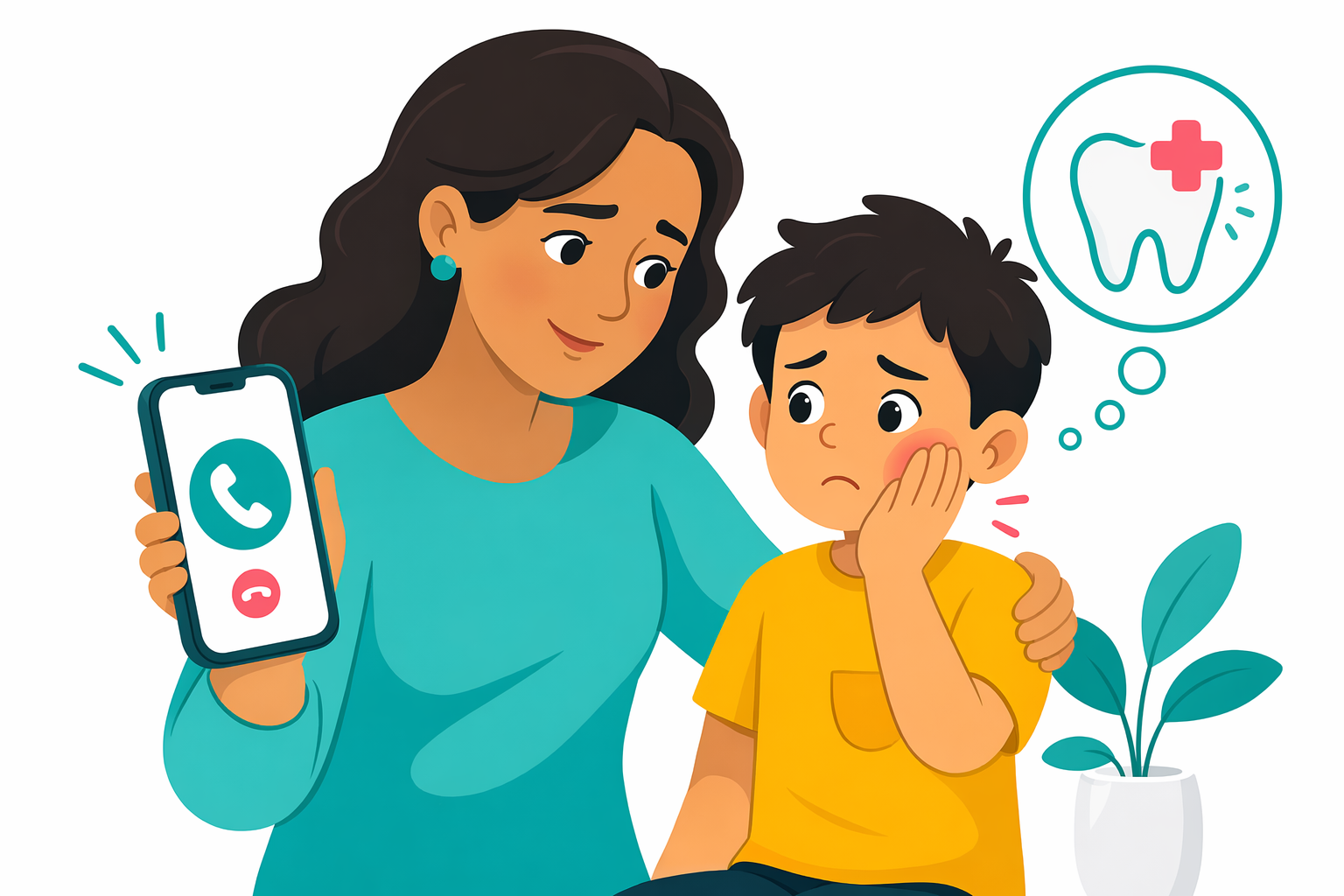
What counts as a kids' dental emergency
A dental emergency is a problem that needs quick attention because your child has pain, swelling, bleeding, or an injured tooth. Common examples are a bad toothache, a chipped or broken tooth, a loose or knocked-out tooth after a fall, bleeding that does not stop, swelling in the gums or face, or a pimple-like bump on the gums that may mean infection.
Some problems can wait a day or two, like a very small chip with no pain. Others should be checked as soon as possible. Facial swelling, trouble swallowing, fever with mouth pain, or bleeding that will not stop need urgent attention. If your child has trouble breathing, severe swelling, or a serious injury, call 911 or go to the nearest emergency room.
SproutSmile is not a dental office, and this is not medical advice. We share general information for parents and help you find or get matched with a pediatric dentist. If you are not sure how urgent it is, talk to a licensed pediatric or general dentist right away.
What parents can do right now
Start by staying calm. Your child will often follow your tone. Sit them down, check the mouth gently, and look for bleeding, swelling, broken teeth, or a tooth that moved out of place. If there is bleeding, press clean gauze or a clean cloth on the area.
For a toothache, rinse the mouth gently with warm water. For swelling, you can place a cold compress on the outside of the cheek for short periods. If a tooth is chipped, try to save the piece if you can. If a permanent tooth is knocked out, handle it by the crown, not the root. A dentist may want to see it fast. A baby tooth that is knocked out is handled differently, so talk to a licensed pediatric or general dentist right away.
Do not put aspirin on the gums. Do not ask your child to bite on very hot, very cold, or hard foods. If there was a hit to the mouth, your child may also have a lip, tongue, or cheek injury that needs attention.
Many parents are not sure whether to call a pediatric dentist or go to the hospital. A dentist often treats tooth injuries, pain, and abscesses. The emergency room can help with breathing problems, severe swelling, serious cuts, broken jaw concerns, or injuries that involve the head or face.
What to expect at the urgent dental visit
At an emergency dental visit, the dentist will first ask what happened and when it started. They may look at your child's teeth, gums, bite, and face, and they may take X-rays to check the tooth roots, jaw, or signs of infection. The goal is to find the cause of the problem and help your child feel safer and more comfortable.
Treatment depends on the problem. A dentist may smooth a sharp chip, place a temporary or permanent filling, protect a cracked tooth, drain an infection, prescribe treatment they think is appropriate, or recommend a follow-up visit. If a tooth is badly damaged, they may talk with you about other options. For a knocked-out or moved tooth, speed matters, so same-day care is often best.
Some children need extra help staying calm during urgent care. Dentists may use local numbing medicine, nitrous oxide, also called laughing gas, or other sedation options when they believe it is appropriate. The dentist will explain what they recommend, why, and what your child should eat or drink before and after, if that applies.
If you want help choosing a good fit for urgent care, this guide on choosing a pediatric dentist can help you know what to ask.
How to prepare your child and what to bring
Use simple words. You can say, “The dentist is going to look at your tooth and help your mouth feel better.” Try not to promise that nothing will hurt. A better promise is that you will stay close, answer questions, and the dental team will explain each step.
Bring your child's insurance card if you have one, a photo ID, and a list of any medicines your child is taking. If a tooth or tooth piece came out, bring it with you. If there was an accident at school or sports, write down when it happened and what your child ate or drank afterward, especially if the dentist may discuss sedation.
Most offices will not need your child's medical records through a website form. When you use SproutSmile, we collect contact details only so we can help connect you with a pediatric dentist.
It also helps to bring comfort items. A favorite small toy, headphones, or a familiar blanket can make a stressful visit easier for some children.
Typical cost range and how insurance, Medicaid, and CHIP can help
Emergency dental costs vary a lot by office, treatment, insurance plan, and where you live. A simple urgent exam may cost much less than treatment for a broken tooth, infection, or sedation. If X-rays, a filling, a crown, or a tooth removal is needed, the total cost can go up.
Many children's preventive visits are covered by dental insurance, Medicaid, or CHIP for eligible families. Emergency care coverage depends on the plan and the treatment. Some offices can tell you the visit fee up front, but the final cost may change after the dentist examines your child and decides what care is needed.
If cost is a big worry, ask the office whether they accept your insurance, Medicaid, or CHIP, and whether they offer payment options. You can also read more on our costs page. Rules and coverage can vary by state.
- Urgent exam only: often lower cost than full treatment
- X-rays, fillings, crowns, extractions, or sedation can add to the total
- Ask for an estimate before treatment when possible
Questions to ask and how to find help fast
When you call a dental office, say clearly that your child has a dental emergency. Describe the main problem in a few words: “My child has swelling,” “My child knocked out a tooth,” or “My child has severe tooth pain.” Ask whether the office can see your child today, what you should do before you arrive, and what forms of payment or insurance they accept.
You can also ask if the dentist regularly treats children, whether they offer nitrous oxide or other sedation options if needed, and whether they have experience with trauma cases like chipped or knocked-out teeth. These questions can help you feel more prepared during a stressful moment.
If you need help finding a pediatric dentist quickly, we can help you get matched with a participating office. The service is free for families.
- Can you see my child today?
- What should I do before we come in?
- Do you accept our insurance, Medicaid, or CHIP?
- Do you treat children with dental injuries or swelling?
- Do you offer laughing gas or sedation if the dentist recommends it?
If your child has tooth pain, swelling, bleeding, or a broken or knocked-out tooth, get urgent dental help quickly and ask a licensed pediatric or general dentist what to do next.