Cavities & fillings for kids
Hearing that your child has a cavity can feel stressful. This guide explains, in simple words, how cavities are found, how fillings usually work, and how to help lower the chance of another one.
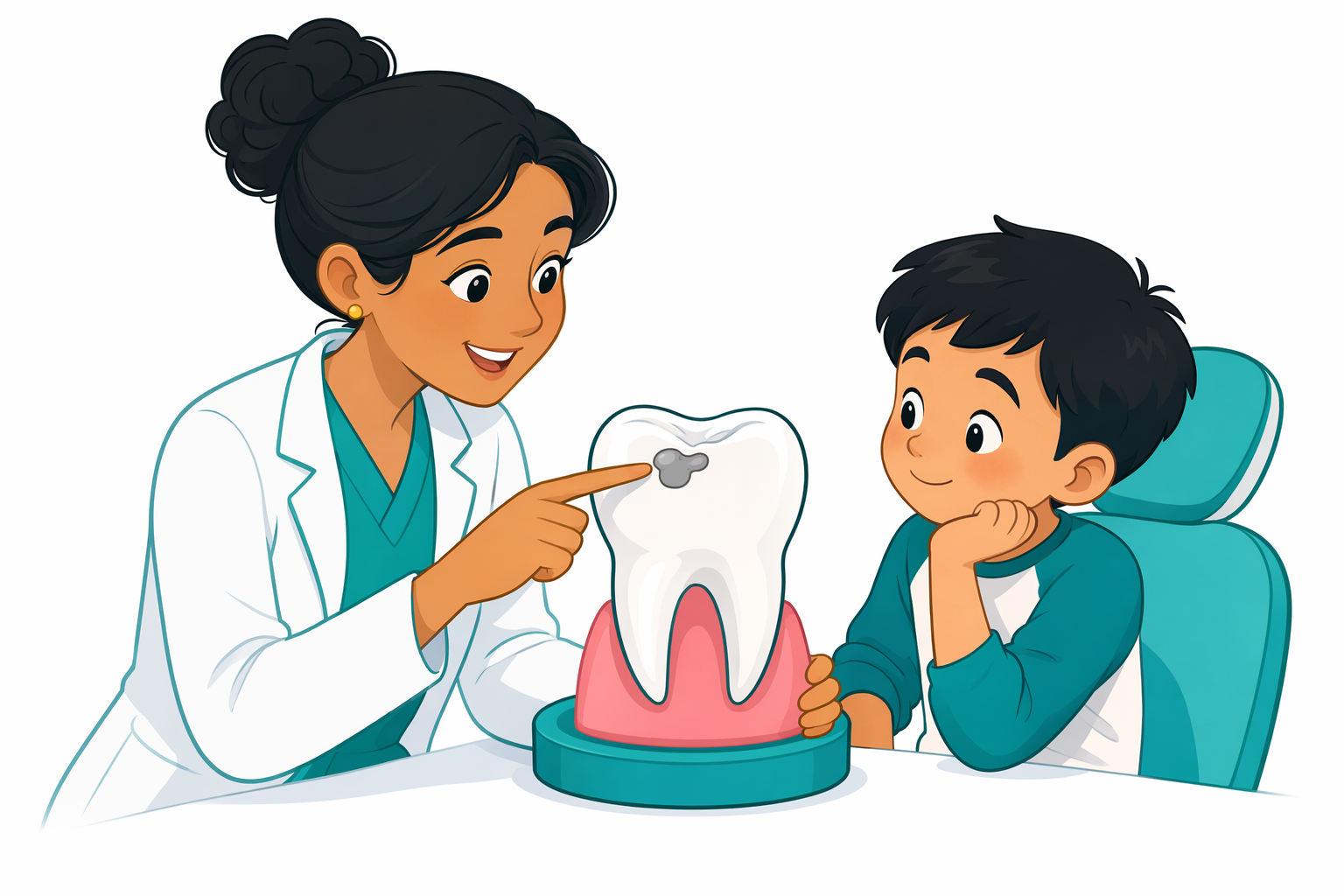
What cavities and fillings mean for your child
A cavity is a small area of tooth decay. It can happen in baby teeth or adult teeth. Baby teeth still matter. They help your child chew, speak clearly, and hold space for adult teeth.
A dentist may find a cavity during a checkup, by looking at the tooth, or by taking X-rays. Some cavities hurt. Others do not hurt at all, which is why regular visits matter.
A filling is a common way dentists treat a cavity. The dentist removes the decayed part of the tooth and fills the space with a dental material. This helps protect the tooth and can stop the cavity from getting bigger.
We are not a dental office, and this is not medical advice. If you think your child has tooth pain, swelling, or a broken tooth, talk to a licensed pediatric or general dentist.
How a kids' filling visit usually goes
Every office is a little different, but many filling visits follow the same basic steps. First, the dentist checks the tooth and explains the treatment plan to you. If your child is very young, nervous, or has more than one cavity, the dentist may talk through different ways to keep your child comfortable.
Many dentists numb the area before placing a filling. They may use a gel on the gums first, then local anesthetic to make the tooth sleepy. Some offices also use nitrous oxide, often called laughing gas, to help some children relax. In some cases, a dentist may discuss sedation. That decision depends on your child, the amount of treatment, and the dentist's judgment.
Next, the dentist removes the decayed part of the tooth and cleans the area. Then the filling goes in. Many parents ask about tooth-colored fillings. These are common, especially on front teeth and many back teeth. Some offices may use other materials depending on the tooth, the size of the cavity, and what your insurance covers.
After the filling, your child may have a numb lip or cheek for a little while. The office may ask you to watch closely so your child does not bite that numb area. Mild soreness can happen, but the dentist should tell you what is normal and when to call.
What to expect before, during, and after the appointment
Before the visit, ask the office how long the appointment may take and whether your child can eat first. For many routine fillings, a normal meal before the visit is fine, but offices may have different instructions. If the dentist plans to use laughing gas or another type of sedation, ask for specific directions ahead of time.
During the visit, many dentists explain things in child-friendly words and move step by step. Your child may hear sounds from dental tools or feel gentle pressure, but the goal is to keep them comfortable. Some children sit on their own in the chair. Others do better with extra support from the dental team.
After the visit, the tooth may feel a little different at first. If the dentist used numb medicine, remind your child not to chew on their lip, cheek, or tongue until the feeling comes back. Ask when they can eat, and whether there are foods to avoid for the rest of the day.
If your child has strong pain after the visit, swelling, fever, or trouble eating because of pain, talk to a licensed pediatric or general dentist.
Typical cost ranges and how insurance can help
Costs vary by office, plan, and where you live. A simple filling on one tooth may cost much less than a larger filling or treatment on several teeth. If X-rays, an exam, laughing gas, or sedation are part of the visit, the total cost may be higher.
As a general estimate, many families may see a range from about $100 to a few hundred dollars per filling without insurance, but this is only a rough guide, not a quote. Tooth location, filling material, and the size of the cavity all affect the price.
Many children's preventive visits are covered by dental insurance, and some plans also help pay for fillings. Medicaid and CHIP cover children's dental benefits for eligible families, though covered services and office participation can vary by state. It is smart to ask the office to explain your expected out-of-pocket cost before the appointment.
You can read more on our costs guide.
How to prepare your child without making them more nervous
Keep your words simple and calm. You can say, "The dentist is going to count and clean your teeth and fix the sugar bug hole in your tooth." Older children may prefer plainer words like, "The dentist will clean the bad part and put in a small filling to protect your tooth."
Try not to promise that nothing will feel strange. A better message is, "The dentist will help keep you comfortable, and I will be with you." Avoid telling scary stories from your own childhood dental visits.
Bring a comfort item if the office allows it. A small stuffed animal, headphones, or a favorite song can help. If your child likes knowing what comes next, tell them the plan in order: check in, sit in the chair, open wide, get the tooth fixed, then go home.
Good habits after a filling matter too. Brushing twice a day with fluoride toothpaste, flossing where teeth touch, and regular checkups help prevent future cavities. Ask a dentist whether fluoride treatments or sealants make sense for your child. They are common ways to help prevent cavities.
- Use short, honest words your child can understand
- Choose a morning visit if your child does better earlier in the day
- Bring your insurance card and a list of any questions about cost
Questions to ask the dentist and how we can help you find one
It is okay to ask questions. Many parents want to know how big the cavity is, which filling material the dentist recommends, how long the filling may last, and what signs to watch for afterward. If your child is very anxious, ask what comfort options the office offers and what they usually recommend for a child of your child's age.
You can also ask practical questions: Does the office accept your insurance, Medicaid, or CHIP? Will there be extra charges for X-rays, laughing gas, or sedation? How soon should the filling be done? If your child has several cavities, can treatment be done in one visit or split into more than one?
If you are looking for a dentist, SproutSmile can help you find or get matched with a pediatric dentist in the US. We only collect contact details so we can connect you with a participating office. We do not ask for your child's medical history or health records on our site.
Start here to get matched or learn more about choosing a pediatric dentist.
A cavity filling is a common way a dentist treats tooth decay in a child, and asking about comfort, cost, and prevention can help you feel more prepared.