Your child's first dental visit
A first dental visit can feel scary, but it’s usually short, gentle, and mostly about learning and prevention. Here’s what typically happens and when to go—plus tips to keep it calm for your child.
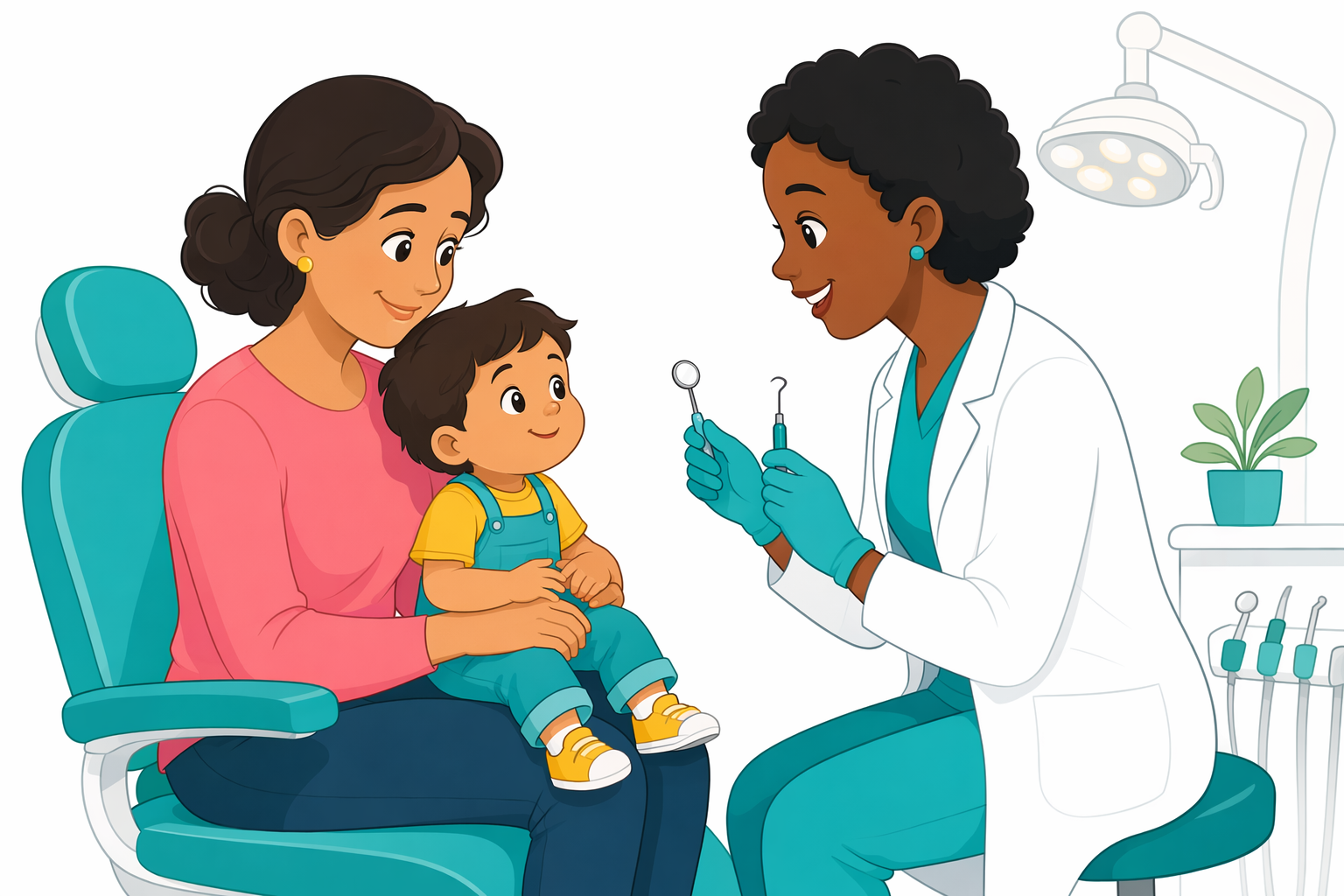
Overview: what your child’s first dental visit is for
A baby or toddler’s first dental visit is a chance to start dental care early. It helps the dentist check how teeth and gums are developing, learn about your child’s needs, and guide you on daily habits that can prevent cavities.
In the U.S., a common recommendation is to schedule the first visit by age 1 or by the time the first tooth comes in (whichever happens first). If your child already has teeth, don’t wait—call and ask for an early “new patient” visit.
We’re SproutSmile. We’re a FREE service that helps you get matched with a pediatric dentist in your area. We can help you choose a dentist that sees young children and fits your family’s needs.
What to expect at the visit (usually quick and gentle)
Every practice is a little different, but a first visit for a baby or toddler often focuses on comfort and prevention. The dentist (or pediatric dental team) will look at your child’s teeth and gums, check for early signs of cavities, and make sure everything is developing normally.
The team may also talk with you about feeding and tooth-friendly routines, how to brush, and fluoride. Many dentists recommend fluoride toothpaste and may recommend fluoride varnish during visits to help strengthen tooth enamel.
If your child is very young, the dentist may not do X-rays right away. If imaging is needed, the team will explain what’s recommended for your child’s age and situation. For comfort, some kids may be given nitrous oxide (“laughing gas”) or other sedation options by the dentist when appropriate—your dentist will tell you what they offer and what they recommend.
Tip: the visit may feel mostly like “getting to know you and your child” rather than a long exam. It’s okay if your child is nervous. The goal is a positive start.
When to go and how to choose a dentist who sees babies
If you’re wondering when to schedule, a good rule is: aim for the first visit by age 1 or when the first tooth appears. This timing helps dentists catch problems early and build a routine.
When you call, ask if the office sees infants and toddlers regularly. You can also ask about how they help kids feel comfortable—things like short appointments, a “tell-show-do” approach, or a parent-friendly plan for calming your child.
To find a pediatric dentist that fits your needs, you can use get matched with a dentist on SproutSmile. You can also read how to choose a pediatric dentist for helpful questions to ask before you book.
Cost range and how insurance, Medicaid, and CHIP can help
The cost of a first dental visit varies by location, the dentist’s pricing, your child’s age, and what’s done at that visit. In many cases, preventive visits may be covered by dental insurance.
If you’re using Medicaid or CHIP (children’s health coverage programs), children’s dental benefits are often available for eligible families. Coverage rules vary by state, and the exact services covered can differ.
For a clearer sense of what families typically pay, see costs in your area. Any numbers you see are estimates, not a guaranteed quote. The best next step is to ask the dental office what the expected visit includes and what your plan covers.
How to prepare your child (and make the visit calmer)
Preparation can make a big difference. Before the appointment, try a simple, positive routine at home: practice brushing with a soft toothbrush and a small amount of fluoride toothpaste (for the recommended age). Keep it short and calm.
On the day of the visit, bring a comfort item if it helps (a small blanket or favorite item). Dress your child in something easy to change and bring a bib or towel. Plan to arrive a few minutes early so you’re not rushed.
You can also use a child-friendly script with the dentist staff. For example, you can say: “My child might be shy at first. Please go slowly.” Many pediatric dental teams are used to families who are nervous, and they can adjust their pace.
If your child is likely to cry, that’s normal. Try not to promise rewards you can’t control. Instead, focus on staying reassuring: “We’re going to check your teeth. You can sit with me.”
Questions to ask at the first visit
Bring a few questions so you leave with a clear plan. Consider asking:
- What should we do at home for brushing and fluoride?
- Will you apply fluoride varnish at this visit? If so, how often is recommended?
- Are X-rays needed for my child’s age? If not now, when?
- What should we expect if my child is anxious or won’t sit still?
- What options do you offer for comfort if needed (for example, nitrous oxide or sedation when appropriate)?
It also helps to ask what you should call for between visits. The pediatric dentist can tell you what’s normal and what might need attention. Remember: we can share general information, but you should talk to a licensed dentist about your child’s specific needs.
How SproutSmile helps you find a pediatric dentist
We’re here to help you find a pediatric dentist that sees young children and can work with your family. SproutSmile is FREE for you.
When you use get matched with a dentist, you share basic contact details so we can connect you with participating offices. We do not collect your child’s dental records or medical history.
Once you’re matched, you can call the office with your questions about early visits, comfort options, and coverage. That way you can choose the practice that feels like the best fit.
Schedule your child’s first dental visit by age 1 or when the first tooth appears, expect a gentle exam focused on prevention, and prepare with calm routines while checking coverage with a pediatric dentist.