Dental anxiety & sedation for kids
If your child feels nervous at the dentist, you’re not alone. We can help you find a pediatric dentist who offers gentle techniques and safe options like nitrous oxide (“laughing gas”) when appropriate.
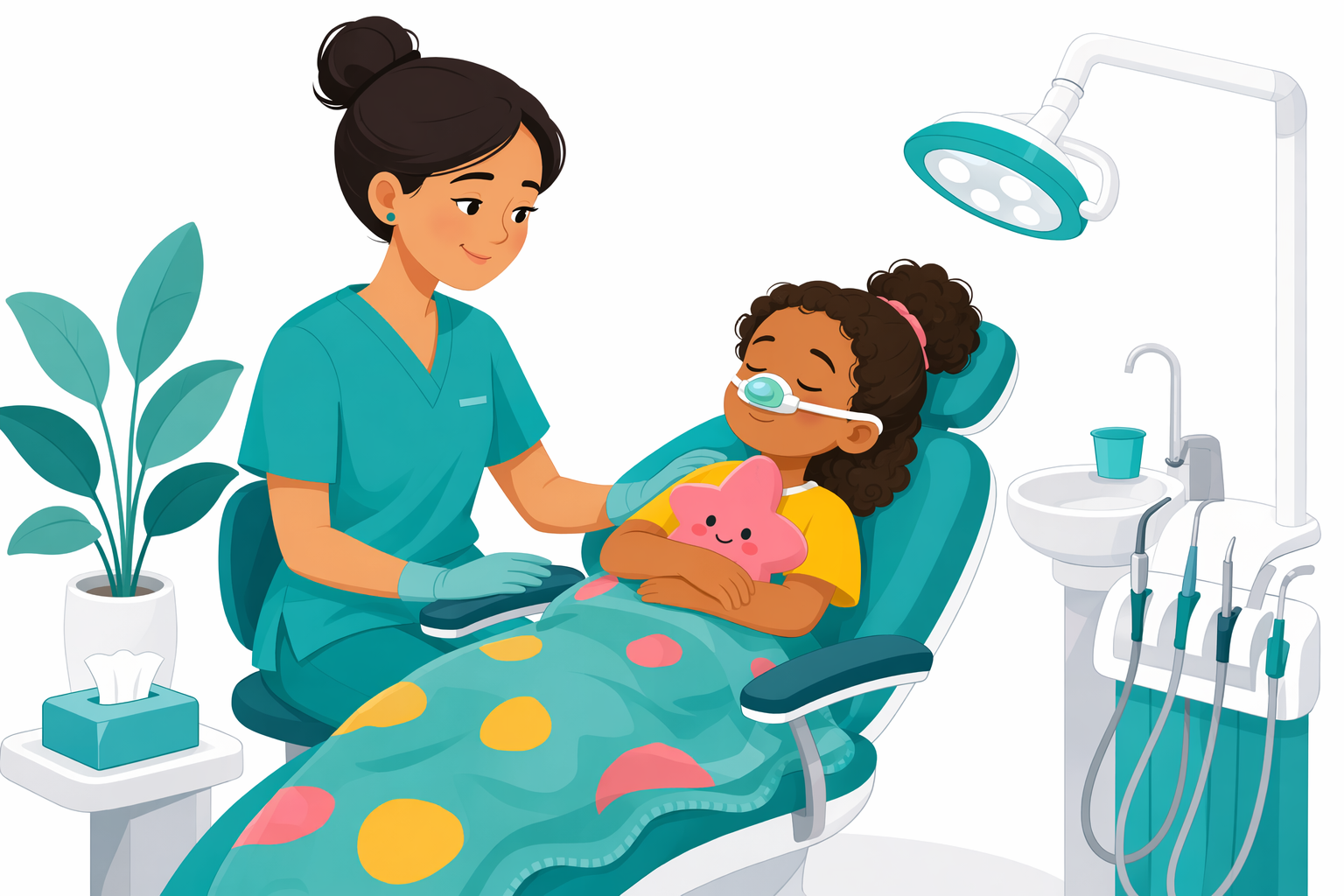
Dental anxiety: what it is, and why dentists plan ahead
Dental anxiety is common in kids. Some children feel fear of new sounds, bright lights, or losing control during an appointment. Others have had a past uncomfortable experience.
A pediatric dentist is trained to help you and your child feel more comfortable. They can use calming, kid-friendly approaches first, then offer additional options if your child needs them. SproutSmile is a FREE service that helps you get matched with a pediatric dentist who treats anxious kids.
This page is general information, not medical advice. Every child is different, so the best plan comes from a licensed pediatric or general dentist after they meet your child.
What you can expect at a visit (including calming options)
For children with dental anxiety, many offices start with a “slow first visit” plan. That can mean letting your child sit in the chair, showing tools, practicing opening wide, and using short breaks. Staff often use supportive coaching and a calm tone, because comfort during the visit matters.
If your child needs extra help, dentists may offer nitrous oxide (often called “laughing gas”). It’s a gas your child breathes through a small mask. It usually helps reduce anxiety during the appointment. Your child typically stays awake and can breathe normally. The dentist monitors your child the whole time.
For some kids or longer treatments, a dentist may discuss other sedation options. Sedation decisions are individualized and depend on your child’s needs, the type of dental work, and the safety rules your dentist follows. Ask your dentist what they recommend for your child.
If your child has medical conditions, medication questions, or special needs, tell the dentist directly. Don’t share medical history with us—SproutSmile only collects contact details to help you connect with a dentist.
Safety and monitoring: how sedation is handled by professionals
Safety comes from careful screening, correct dosing, and close monitoring. A licensed dentist (and their team, following state and office protocols) should explain what option is being considered and what to expect before any medication is used.
With nitrous oxide, the dentist monitors your child’s comfort and breathing during the visit. With deeper sedation options, the office may use extra monitoring steps and have clear instructions for eating, drinking, and arriving on time.
Because rules can vary by state and by office, always ask the dentist to walk you through their process: who monitors your child, how they handle emergencies, and what safety checks happen before, during, and after the procedure.
SproutSmile is not a medical provider and cannot approve or recommend sedation. You’ll get the real answers after you talk with a dentist who can examine your child.
How much does anxious-kid dental care cost? (and how insurance can help)
Costs vary a lot. Prices depend on where you live, what treatment your child needs, the dentist’s policies, and the sedation option (if any). A preventive visit is often less expensive than visits that need fillings, space maintainers, or more extensive care.
Many families can get help with costs through dental insurance, Medicaid, or CHIP. In many US states, children’s dental benefits include preventive visits like exams and cleanings, and coverage may extend to additional care. If your child is eligible for Medicaid or CHIP, dental coverage is often available, though details vary by state.
To get a clearer idea, review estimates and plan details with the dental office. You can also browse our cost guidance at dental care costs for kids.
This section is general information, not a price quote. Your final cost depends on your insurance plan and the dentist’s treatment plan.
How to prepare your child (simple steps that really help)
Preparation works best when it’s calm and short. Try telling your child, “We’re going to practice at the dentist. We’ll go slow, and you can raise your hand if you need a break.” Avoid scary stories or promises like “It won’t hurt at all.”
Before the appointment, ask the office what to expect in the first minutes (for example, how long your child will sit before any tools are used). Some dentists start with a “tell-show-do” approach and move step-by-step at your child’s pace.
If your child has anxiety about breathing through a mask, nitrous oxide may be explained in kid-friendly language. You can ask, “Can we do a quick practice with the mask before anything else?”
Bring comfort items when the dentist allows them. Some families use a small favorite toy, a blanket, or noise-canceling headphones for waiting rooms. Follow the dentist’s instructions about food and timing—sedation options may have specific rules.
Questions to ask the dentist (bring this list to your call)
When you contact a pediatric dentist, these questions can help you understand the approach and feel more confident.
• “How do you help children who are afraid of the dentist?”
• “Do you offer nitrous oxide (‘laughing gas’)? How do you explain it to kids?”
• “Will my child be awake during nitrous oxide, and how do you monitor them?”
• “What other sedation options do you offer, and when are they used?”
• “What safety checks do you do before sedation?”
• “How long will the appointment be, and what will the after-care instructions be?”
• “What should we do if my child is still very anxious on the day of the appointment?”
If you’re choosing between pediatric dentists, our guide at choosing a pediatric dentist can help you compare questions, policies, and comfort approaches.
Find a pediatric dentist for your child (FREE matching through SproutSmile)
You don’t have to figure this out alone. SproutSmile is FREE for families and can help you get matched with a pediatric dentist in your area who treats anxious kids.
When you request to be matched, you’ll share basic contact details so we can connect you with offices that can help. We do not ask for your child’s medical history or health records.
Once you’re connected, call the office and use the questions above. Ask about their comfort plan, nitrous oxide availability, and sedation safety procedures so you can make the decision that fits your child.
We help you find a pediatric dentist who supports anxious kids with gentle techniques and, when appropriate, options like nitrous oxide—then you can talk through safety, preparation, and costs.