Helping an anxious child at the dentist
If your child gets nervous about the dentist, you’re not alone. This guide shares common reasons kids feel scared and simple things you can do to help your visit feel calmer.
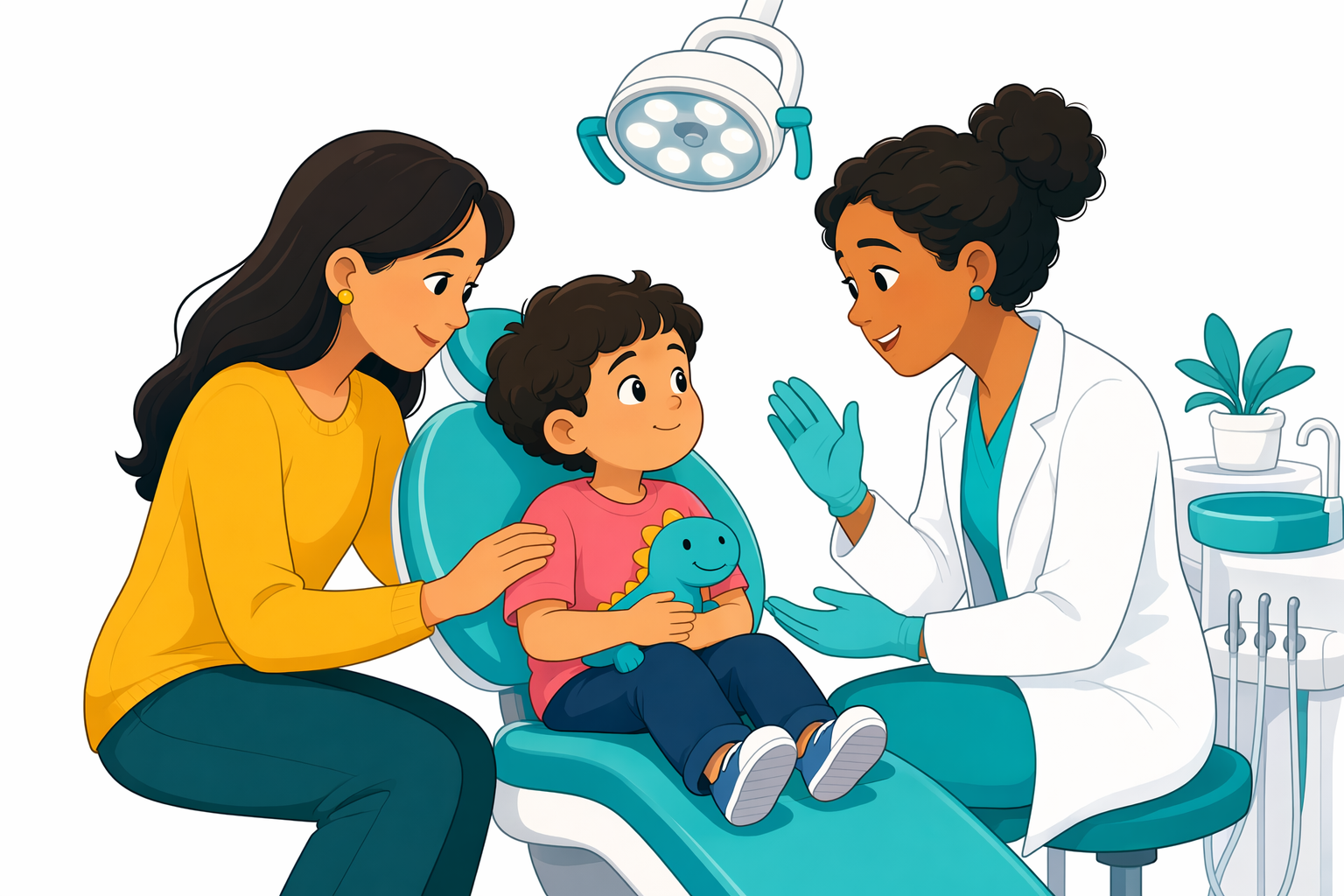
Why kids get scared at the dentist (and it’s not “bad behavior”)
Dentist visits can feel scary for many children. New smells, unfamiliar sounds, bright lights, and being in a chair can all feel overwhelming—especially if it’s the first time.
Some kids also worry about pain, choking, or the idea of “something in their mouth.” Even if you try to explain, your child may not know what will happen next. Anxiety grows when things feel uncertain.
Most dental checkups for kids are about prevention and comfort. A gentle pediatric dentist plans the visit around your child’s needs and the pace of the appointment—so your child can feel safe and in control as much as possible. We help you get matched with a pediatric dentist who works with kids every day.
What a gentle pediatric dentist actually does to keep things calm
A caring pediatric dentist and their team usually start by getting to know your child in a friendly way. They may talk in simple words, show tools without using them yet, and explain what will happen step-by-step.
Many kids do better with a “tell-show-do” approach. That means the dentist may show a mirror or brush first, then do a small part, then check in. You can ask the team how they handle nervous kids before you schedule.
If your child is very anxious, dentists may use comfort tools such as numbing options for the mouth. Dental teams also commonly use nitrous oxide (“laughing gas”) for some children to help them relax during certain visits, depending on the situation. Your licensed dentist will decide what’s appropriate for your child.
Prevention matters too. For example, fluoride and dental sealants can help prevent cavities, and those preventive steps can often reduce the chance of more stressful procedures later.
What you can do at home and in the waiting room
Start simple and calm. Use short phrases your child can understand, like: “We’re going to check your teeth. You can take breaks. I’ll stay right here.” Avoid long explanations right before the appointment.
Practice a “brave routine” at home. You can let your child sit in a chair, open their mouth for a few seconds while you count, and reward the effort—nothing big, just a small celebration. If your child is nervous about the chair, bring a comfort item from home (a small toy or blanket) and ask the office ahead of time about what’s allowed.
In the waiting room, keep expectations steady. Choose something relaxing to do together—read a short book, look at a familiar show on your phone, or do quiet breathing with your child. Try not to discuss the hardest parts of dental visits in front of them.
If your child asks scary questions, answer honestly but gently. For example, “You might hear tools, but we will pause if you need a break.” If you’re not sure how the visit will go, it’s okay to say, “The dentist will tell us what’s next when we get there.”
Common mistakes that can make anxiety worse
Many parents mean well, but a few common moves can increase fear. Avoid promises like “It won’t hurt at all.” Instead, you can say, “The dentist will help keep you comfortable, and we can take breaks.”
Try not to describe scary experiences you’ve heard from other kids. Hearing secondhand stories can make your child imagine the worst before they even sit in the chair.
Another mistake is leaving your child in charge of guessing. If they don’t know what to expect, uncertainty can feel bigger. Bring calm, clear information, like: “First we check your teeth. Then we clean and count. After that, we pick a sticker.” You can also ask the team what the visit will include.
If your child had a bad experience before, don’t ignore it. Tell the dentist what your child found hard (for example, “the noise” or “being held down” or “not knowing what comes next”). This is general communication, not medical advice—still, it helps the team plan a gentler approach. If you’re scheduling a first visit, you may find this helpful: first visit by age 1 or first tooth.
Next step: plan a calm first appointment (and get cost clarity)
If you’re scheduling soon, it helps to call and ask a few direct questions. You can ask how the team handles anxious kids, whether they use a “tell-show-do” approach, how long the visit usually is, and what options exist for comfort. You can also ask how you can stay involved during the appointment.
To reduce surprises, it’s smart to check costs before you go. Dental coverage for kids often includes preventive visits, and many families qualify for help through Medicaid or CHIP, if eligible. Costs can still vary by office, insurance plan, and where you live. For practical guidance, see dental costs for kids.
When you’re ready, you can get matched with a pediatric dentist who serves your area and supports anxious children. Share that your child is nervous and that you want a gentle, kid-friendly approach—so the office can be prepared.
Kids often feel scared at the dentist because it’s new and unfamiliar, and gentle pediatric teams use comfort strategies—plus you can help at home with calm, clear expectations.