Preparing for your child's first dental visit
A first dental visit can feel like a big step, especially for a baby or toddler. A little planning can make the day smoother and help your child feel safe, calm, and ready.
When should your child have a first dental visit?
Most children should see a dentist by age 1, or within 6 months of the first tooth coming in. That can sound early, but baby teeth matter. They help with eating, speech, and saving space for adult teeth.
The first visit is often short and simple. It gives a dentist a chance to look at how your child's teeth and gums are growing, talk with you about cleaning and feeding habits, and help prevent cavities before they start.
If your child already has tooth pain, swelling, an injured tooth, or dark spots on the teeth, do not wait for a routine visit. Talk to a licensed pediatric or general dentist as soon as you can.
- First visit: by age 1 or first tooth
- Baby teeth are important, even though they fall out
- Early visits can help prevent bigger problems later
What usually happens at the first visit
For many babies and young children, the first visit is more about getting comfortable than doing a lot of treatment. A dentist or team member may ask about brushing, bottles, sippy cups, snacks, thumb sucking, and whether your child drinks tap water or uses fluoride toothpaste.
The dentist will usually count the teeth and check the gums, bite, and mouth. For very young children, this may happen with your child sitting on your lap. Some offices use a "knee-to-knee" position, where you and the dentist help your child feel secure during the quick exam.
The office may clean the teeth, if needed, and may place fluoride varnish to help protect against cavities. Some children also need X-rays, but not always at the first visit. That depends on age, visible problems, and the dentist's judgment.
If your child is older and nervous, the visit may still be simple: look, count, clean, and talk. Pediatric dentists are used to short attention spans, tears, and wiggles. A hard first visit does not mean future visits will go badly.
- You may stay with your child during the visit
- The exam is often quick and gentle
- Fluoride treatments can help prevent cavities
How to prepare at home
Start with the way you talk about the visit. Keep your words calm and simple. You can say, "The dentist will count your teeth and help keep your mouth healthy." Avoid scary words like "shot," "drill," "pain," or "it won't hurt." Even well-meant promises can raise worry.
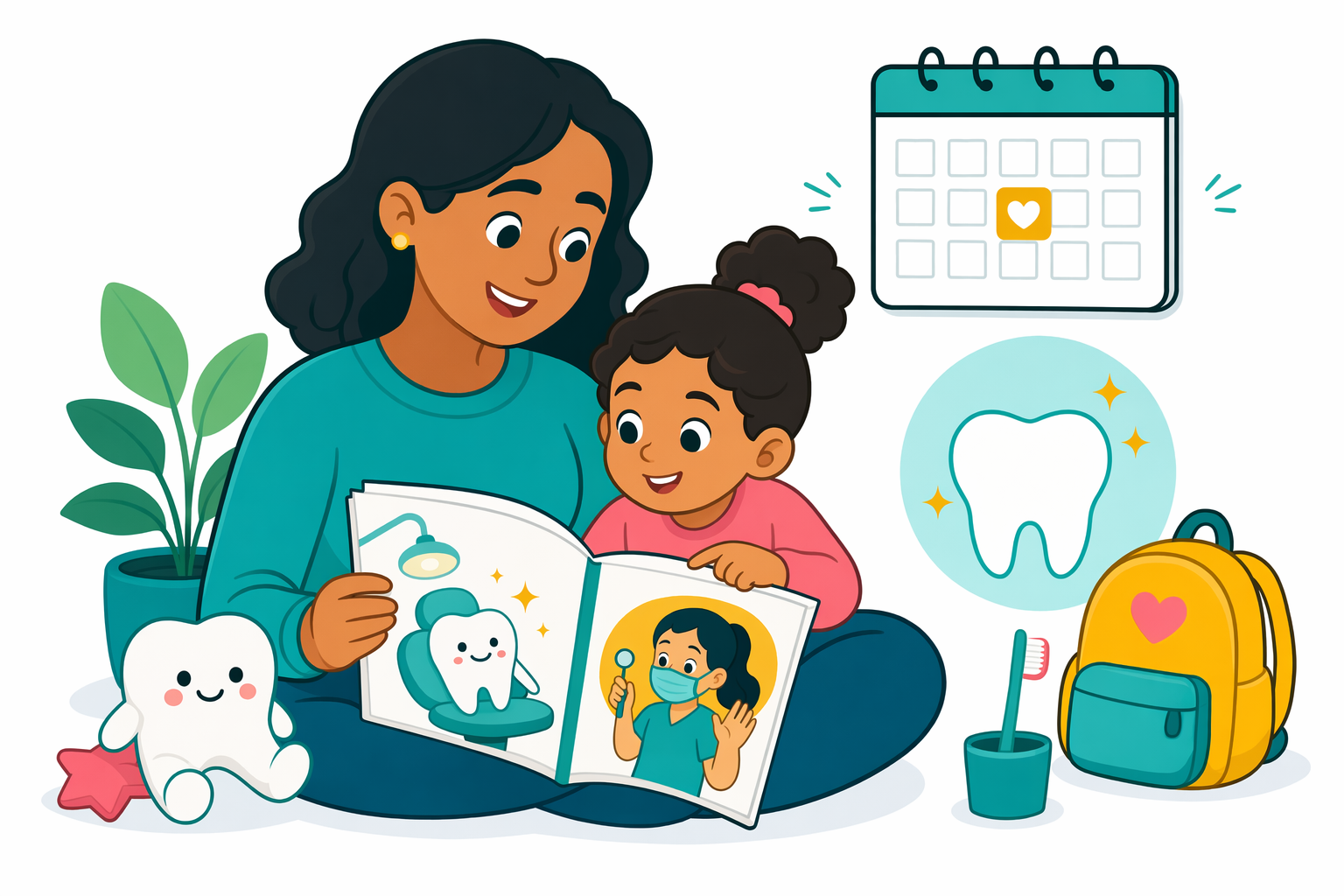
Try a short pretend play at home. Let your child open wide while you count teeth with a toothbrush or clean finger. Read a picture book about a dental visit, or let your child watch you brush and say, "We take care of our teeth every day."
Choose a good time of day if you can. For young children, that often means a morning visit, after sleep and after a light meal. Bring comfort items like a favorite stuffed toy, pacifier, or blanket if the office allows it.
If your child is old enough to ask questions, answer honestly but briefly. You do not need to explain every tool. Too much detail can make some children more nervous. If you need help finding an office that sees children, we can help you get matched with a pediatric dentist.
- Use calm, simple words
- Practice opening wide at home
- Pick a time when your child is usually rested
Common mistakes parents make
One common mistake is waiting too long. Some parents think baby teeth are not a big deal because they fall out. But cavities in baby teeth can still cause pain, infection, trouble eating, and trouble sleeping.
Another mistake is using the dentist as a threat. Saying "If you don't brush, the dentist will be mad" can make the office feel scary before your child even gets there. It helps more to frame the visit as normal care, like a checkup.
Some parents also bring a hungry, tired child and hope for the best. That can make a tough moment even harder. A snack, nap, and a little extra time can make a real difference.
It also helps not to share your own dental fears in front of your child. Many adults have had stressful dental experiences. Your child does not need that picture in their mind before a first visit.
- Do not wait until there is pain
- Do not use the dentist as a punishment
- Try not to bring your own fear into the room
What about cost, insurance, and what to ask
Many children's preventive dental visits are covered by private insurance, Medicaid, or CHIP for eligible families. Coverage and rules vary by state, plan, office, and your child's age. If you are unsure, ask the dental office what is covered before the appointment. You can also read more on our costs page.
When you call, keep your questions simple. Ask whether the office sees children your child's age, whether they take your insurance, what to expect at a first visit, and whether a parent can stay with the child. If your child has special needs or strong anxiety, tell the office that in general terms when you book.
SproutSmile is a free service for families. We are not a dental office, and we do not give medical or dental advice. We help parents find offices that see children. We only collect contact details so we can help you connect with a participating office.
Your next step
If your child has not had a first dental visit yet, making the appointment is a good next step. Early care helps you learn what is normal, what to watch for, and how to build healthy habits at home.
If you want a clearer picture of the visit itself, see what happens at a child's first dental visit. If you are ready to look for an office, get matched here.
And if you are worried that your child will cry, refuse to open, or cling to you, you are not alone. That is very common. The goal is not a perfect visit. The goal is helping your child start getting used to dental care in a safe, steady way.
For questions about your child's specific teeth, pain, injury, or treatment needs, talk to a licensed pediatric or general dentist.
Your child's first dental visit is usually a simple early checkup, and a little calm practice at home can make it easier for both of you.