Baby teeth & early dental care
Baby teeth do a big job. Early dental care helps protect your child’s smile, comfort, speech, and eating habits from the very start.
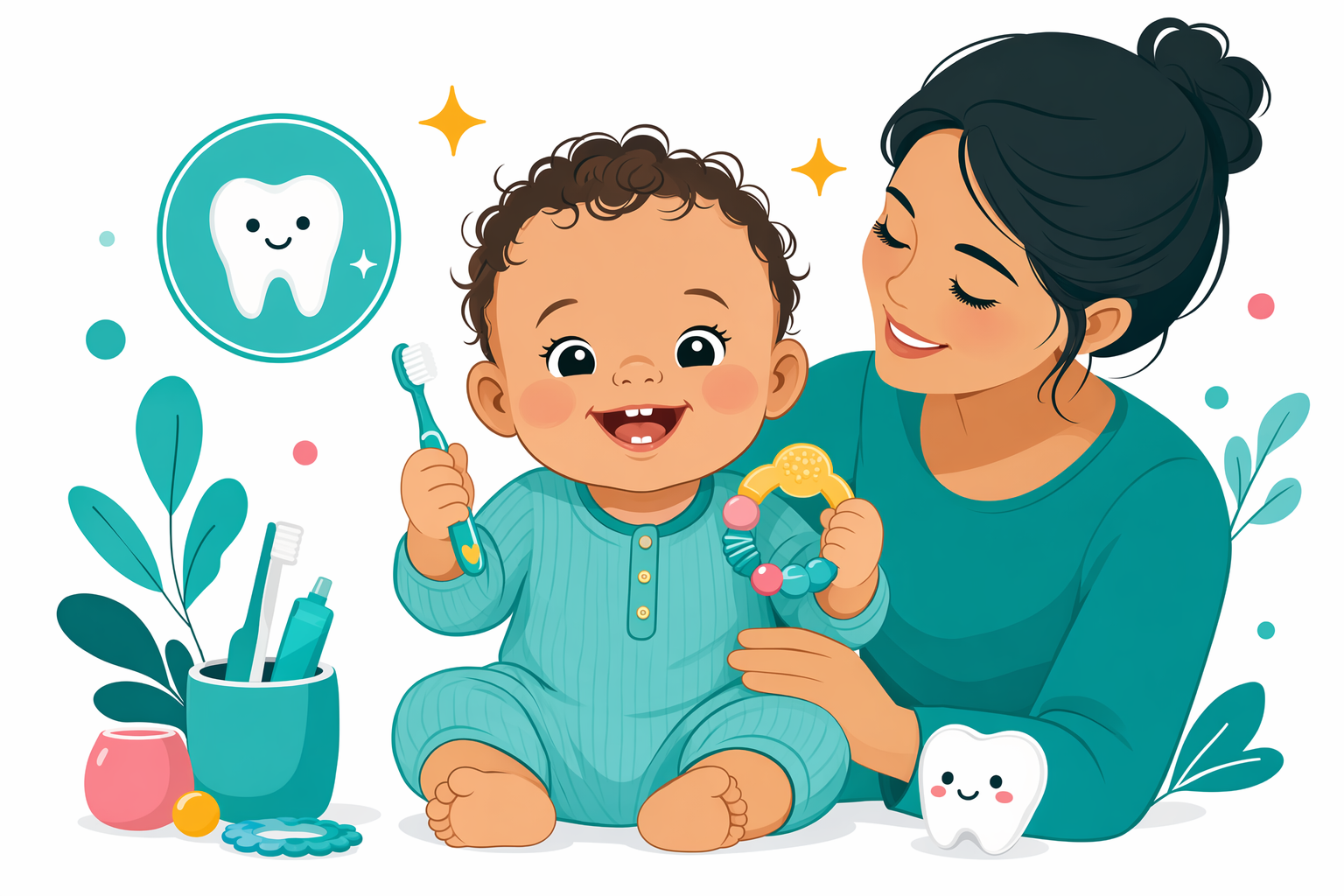
Why baby teeth matter
Baby teeth are not “just practice teeth.” They help your child chew food, learn clear speech, and hold space for adult teeth to come in later. When baby teeth get cavities or are lost too early, it can affect comfort, sleep, eating, and the way adult teeth come in.
Early dental care is about simple prevention and helping your child get used to the dentist in a calm way. A first dental visit is usually recommended by age 1, or within 6 months of the first tooth coming in. If you are not sure when to go, talk to a licensed pediatric or general dentist.
This stage also includes everyday habits at home. Teething, cleaning new teeth, fluoride, snacks, bottles, sippy cups, thumb-sucking, and pacifiers can all affect dental health. Small routines now can make a real difference over time.
What early dental care includes
For babies and toddlers, dental care is usually gentle and short. The dentist may look at how your child’s teeth are coming in, check the gums, and watch for early signs of cavities or spots on the teeth. They may also talk with you about brushing, fluoride, feeding habits, and what is normal for your child’s age.
At home, early care often means wiping the gums before teeth come in and then brushing twice a day as soon as the first tooth appears. Use a small, soft toothbrush. For fluoride toothpaste, ask a licensed pediatric or general dentist what amount is right for your child’s age and needs. Fluoride and sealants are tools dentists use to help prevent cavities.
Parents also ask about teething. Teething can mean drooling, chewing, and fussiness, but every child is different. A dentist can explain what to watch for and when mouth changes may need a closer look.
Thumb-sucking and pacifiers are common too. Many young children stop on their own, but if a habit lasts longer, it can affect tooth position or bite. A dentist can tell you what is common by age and when it may be time to work on stopping.
What to expect at the first visit
A first visit is often more about getting comfortable than doing a lot of treatment. The dentist or hygienist may ask about your child’s feeding habits, bottle or nursing patterns, pacifier use, thumb-sucking, brushing routine, and whether anyone in the family has had a lot of cavities. You do not need to share medical history on our site. If a dentist needs health details, they will ask you directly in their office.
For many babies and toddlers, the exam is done with the parent close by. Some offices use a knee-to-knee position, where your child starts in your lap and gently leans back so the dentist can see the teeth. The dentist may count the teeth, check the bite, and look for early decay. They may clean the teeth if needed and may suggest a fluoride treatment.
X-rays are not always needed at the first visit. It depends on your child’s age, cavity risk, and what the dentist sees. If your child ever needs more than a routine visit later on, dentists may discuss options like nitrous oxide, sometimes called laughing gas, or sedation. Those are decisions to review directly with a licensed dentist.
Most first visits are short. The main goal is to help your child and you learn what healthy teeth look like and what to do next.
How to prepare your child
Keep it simple. You can say, “The dentist will count your teeth and make sure they are clean and healthy.” Short, cheerful words often work better than a big build-up. Try not to promise there will be “no pain,” because even a normal cleaning can feel strange to a young child.
If possible, book the visit at a time of day when your child is usually fed and rested. Bring comfort items if that helps, like a favorite toy, blanket, or cup. If your child is very young, bring anything you may need for a diaper change or snack after the visit.
At home, let your child see you brush your own teeth. You can practice opening wide, counting teeth, and taking turns with the toothbrush. This makes the visit feel more familiar. If your child cries during the appointment, that does not mean the visit went badly. Many little children cry because the setting is new.
If you are looking for an office that works well with babies and toddlers, our guide to choosing a pediatric dentist can help.
Typical costs and how coverage may help
Cost depends on the office, your area, your child’s age, and what is done at the visit. A basic first exam for a baby or toddler may be lower cost than a visit with X-rays, a cleaning, or fluoride treatment. In many areas, a routine visit may range from about $50 to $250 before insurance, but this is only a general estimate, not a quote.
Many children’s preventive dental visits are covered in full or in part by insurance. Medicaid and CHIP also cover children’s dental benefits for eligible families, though rules and covered services can vary by state and by plan. The dental office can tell you what they accept and what your out-of-pocket cost may be.
If you want a simple overview of pricing and coverage, see our costs page. It can help you know what questions to ask before you book.
Questions to ask the dentist and how we help you find one
It is okay to ask basic questions. In fact, it helps. You can ask how the office handles first visits, whether they see babies and toddlers often, what they recommend for brushing and fluoride, and what habits they watch for with bottles, sippy cups, pacifiers, or thumb-sucking. You can also ask what the visit may cost, whether they accept your insurance, Medicaid, or CHIP, and if forms are available in your language.
You may also want to ask what happens if your child is nervous or crying, whether a parent stays in the room, and when the next visit should be. If the dentist sees something that needs treatment, ask them to explain your options in plain language.
SproutSmile is a free service for families. We help you find and get matched with a pediatric dentist in the US. We collect contact details only so an office can reach you. We do not collect your child’s medical history or health records on our site. If you are ready, you can get matched with a dentist near you.
Early dental care helps protect your child’s baby teeth, and a first visit by age 1 can give you simple, practical guidance on brushing, fluoride, feeding habits, and what comes next.